 XMOHAN
Brown University
ScM in Computer Science; experimental peer-to-peer multicast, Arrow Multicast and distributed gaming, with work involving Maurice Herlihy.
I am a philosopher-scientist, researcher and founder working across distributed systems, embedded computing, artificial intelligence and the physical world. My early laboratory work and published research connect to ongoing work on embodied intelligence at Robometrics® AGI.
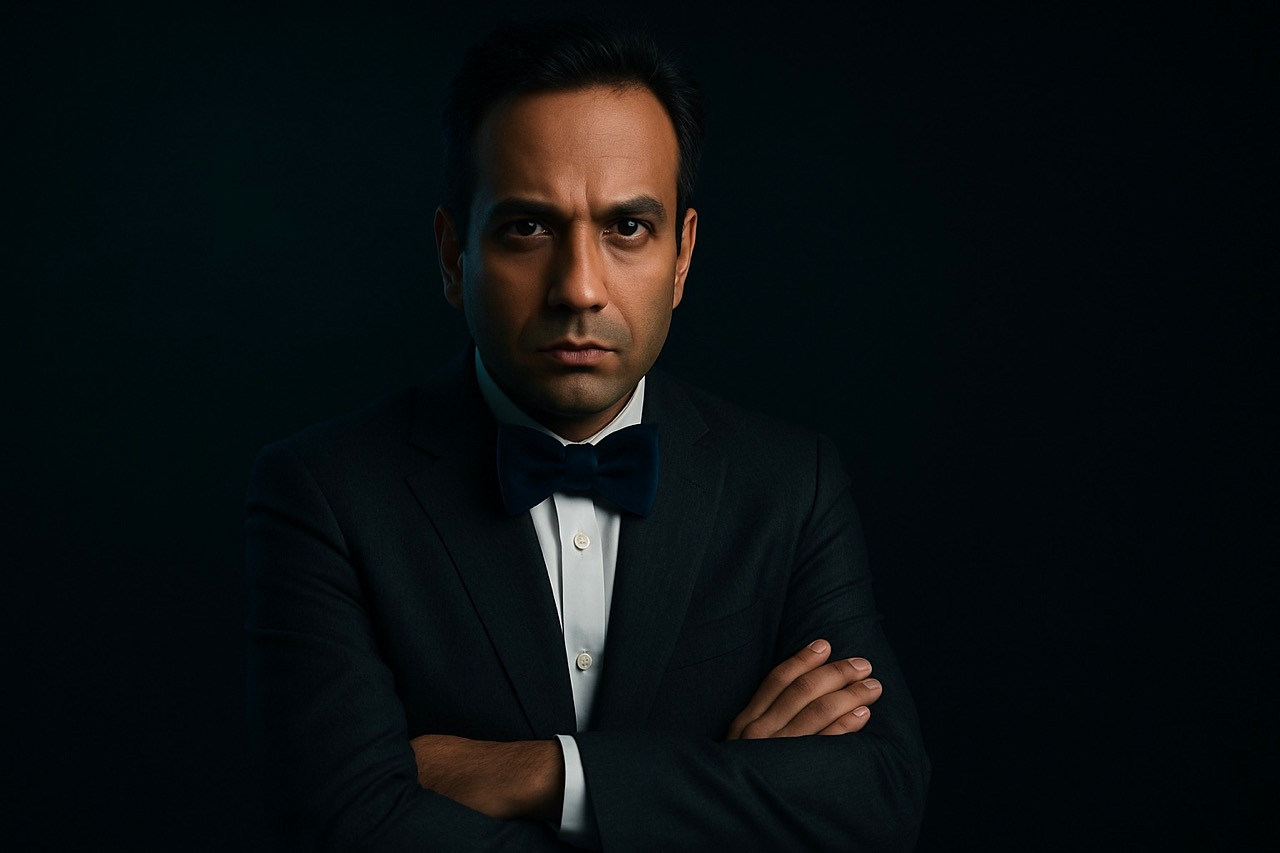
I began programming in 1987 on a BBC Micro. My experience spans 35+ years in computing, 25+ years in embedded systems and 15+ years in AI. I earned an ScM in Computer Science at Brown University and a BS in Computer Science at IIT Roorkee.
I founded Robometrics® AGI, an independent research lab studying embodied general intelligence for the physical world. I am also Founder and CEO of Robometrics® Machines, a separate applied AI product organization, and Managing Partner of Robometrics® Law Foundation, a public-interest initiative focused on access to justice and AI law and policy. These organizations have distinct missions.
My interests connect scientific research to the design of systems that must work under real constraints: limited computing resources, uncertain information, human attention, physical environments and consequential decisions.
ScM in Computer Science; experimental peer-to-peer multicast, Arrow Multicast and distributed gaming, with work involving Maurice Herlihy.
Work with Vana Kalogeraki on distributed data summaries, Bloom filters, speculative routing and update propagation for decentralized discovery.
Software-defined radio experiments using digitized AM spectrum and software filtering. The original work is situated in the lab’s digital communication research environment.
Coauthored work on communication through steel cargo containers using hybrid acoustic/RF links and on bandwidth-adaptive multicast for pervasive monitoring, with Reto Hermann, Dirk Husemann and François Dolivo.
Sensor networks, multihop routing, and an experimental approximately 100-node testbed supporting performance analysis.
BS in Computer Science, preceding the professional embedded systems and telecommunications research roles.
My first professional role after graduating from IIT Roorkee in 1999: Senior Engineer in the R&D division of Himachal Futuristic Communications Limited. Designed real-time embedded systems, including intelligent LA/DA (Line Amplifier/Distribution Amplifier) units for cable television networks; wrote assembly-language firmware for severely constrained microcontrollers with just a few kilobytes of RAM, in some cases without an operating system.
Software Engineer in Nortel’s internationally connected R&D operation, developing and optimizing enterprise-router software on its proprietary RTOS for global enterprise and telecom networks. Some of the code I wrote ran on critical network infrastructure powering the New York Stock Exchange. I also researched mobile voice browsing and voice request/response for WAP and next-generation wireless devices.
Explore the detailed 1999–2005 research history →
My work after the early university and industrial research years spans enterprise software at Oracle, deep learning and contextual-perception research through Skive it, Inc., independent scientific and technical evaluation since 2012, applied AI at Robometrics® Machines, access-to-justice work at Robometrics® Law Foundation, and the independent embodied-intelligence research agenda at Robometrics® AGI.
Skive it began exploring how video might reveal the style and mood of an experience and make that context searchable through natural language. The company also articulated early ideas for specialized AI hardware and robotic systems capable of more context-sensitive interaction. These goals anticipate aspects of later embodied-AI research without establishing machine consciousness.
Oracle · 2006–2011. Working across cloud management, virtualization, application and systems management, I connected engineering, product teams, legal, partners and global sales organizations. This included technical diligence and integration associated with six or more acquisitions, including Sun Microsystems, as well as source-code licensing, open-source software and enterprise technology partnerships. These were professional and applied systems activities, not a claim of academic publication. Read the Oracle work summary →
Cloud and enterprise computing. Subsequent work at CloudVolumes addressed cloud workload management and application virtualization. Since 2013 my advisory and technical work has also included AI capabilities, software architecture, cybersecurity, cloud and edge infrastructure, technical due diligence, technology governance, and the practical limits of automation.
Expert analysis. My work with litigation counsel, businesses and investors asks how AI and software systems behave in practice, how technical claims can be assessed, and how complex engineering can be explained clearly. Expert-witness and advisory work is distinct from the original research publications documented elsewhere on this website.
Experiments in constrained systems force questions that remain relevant: what information should a node retain, when should it communicate, how does latency alter collective behavior, and what must be measured before a system can be trusted? The historical papers and diagrams document how these questions were approached in their own period.
My work on the consequences of AI includes writing with Roger Bickerstaff on the transparency, classification and regulation of AI systems (2019–2021), and work with Richard A. Boswell on US immigration policy and American leadership in artificial intelligence (2021). Robometrics® Law Foundation explores access to justice, understandable legal information and AI policy through a separate public-interest mission.
As an aviator, photographer and ballroom dancer, I approach intelligence not only as computation but also as perception, timing, movement and judgment in the physical world. My experience with the Stanford Ballroom Dance Team (2005–2016) informs my interest in coordination and nonverbal communication. Through PilotMind, technical talks and visual storytelling—including Loving the Useless—I explore human–machine interaction, creativity, emotion and agency.
I share scientific and engineering questions with research, industry and aviation audiences through technical briefings, public presentations and Robometrics® Machines AI Demo Days at EAA AirVenture Oshkosh. Topics include embodied intelligence, generative AI for aviation, on-device AI, human factors and how people should remain in control of consequential systems.
Explore PilotMind and the public AI Demo Day record ↗ · AI Demo Day chronology on this site →
Available for research discussions, expert briefings, corporate workshops and keynote presentations on AI, aviation and human–machine collaboration.
At Robometrics® AGI, an independent research lab, my work pursues embodied general intelligence for the physical world through original AI model architectures, learning through experience, perception–memory–action integration, continuous on-device learning and recursive self-improvement. Work on human-emotion perception and proposed instinct-like or digital-limbic mechanisms seeks to understand context-sensitive judgment. Machine consciousness and subjective feeling are open scientific questions, not established capabilities.
The current lab, Robometrics® Machines (applied products), and Robometrics® Law Foundation (access to justice and AI law/policy) are distinct in scope. Original Brown, HP, MIT, IBM and Intel research remains attributed to those institutions and coauthors.